Duramax engines are known for their strength, but real performance gains come from upgrading the turbo system. A properly selected Duramax LB7 turbo upgrade improves airflow, boosts horsepower, and supports heavier towing loads without sacrificing reliability. These improvements make a noticeable difference in how the truck responds under pressure and long-term driving conditions.
Weavertown Diesel in Myerstown, PA, designs and builds performance-tested components for diesel trucks, including Duramax turbos built for real-world use. Whether it is a turbo for LBZ Duramax or an LML Duramax turbo upgrade, the focus stays on durability, controlled exhaust temperatures, and consistent power delivery. Each upgrade is developed to help Duramax owners get more from their trucks while maintaining dependable operation across demanding workloads.
What Is a Duramax LB7 Turbo Upgrade?
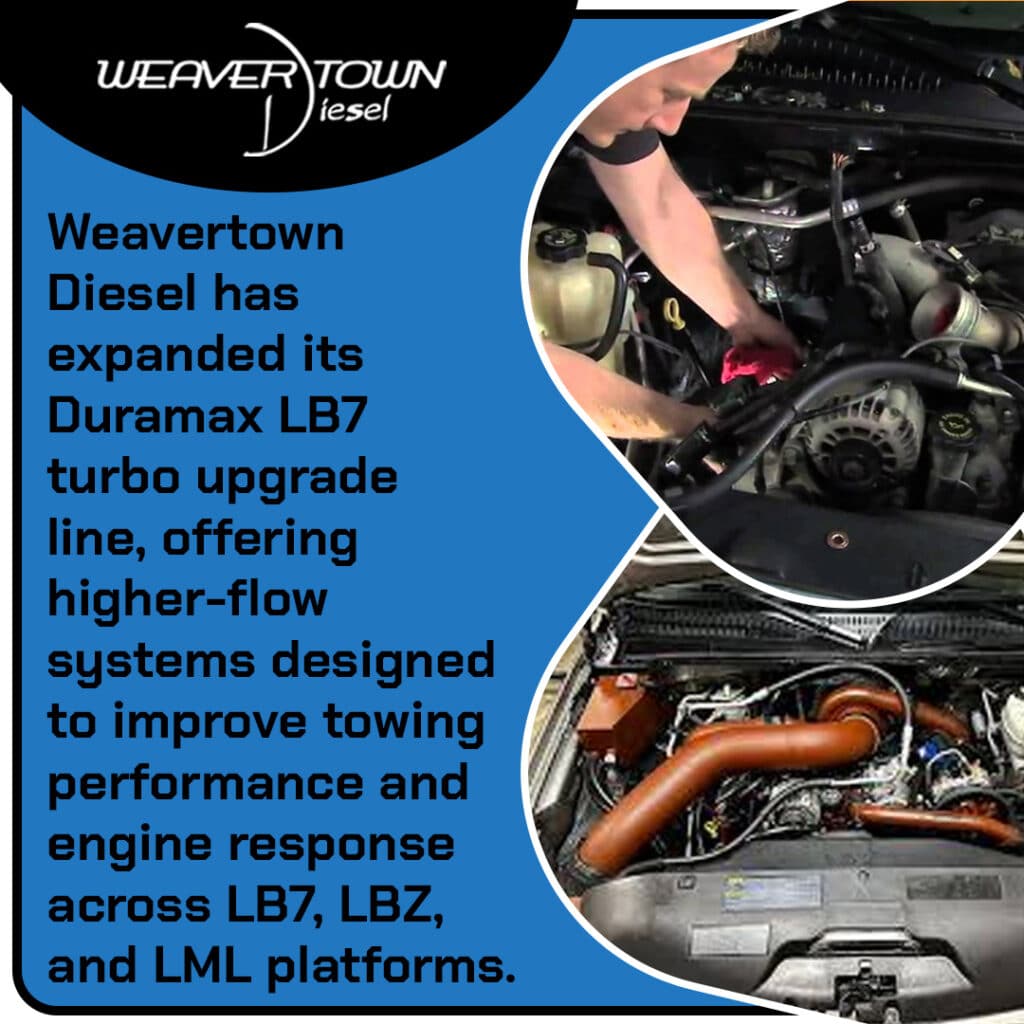
A Duramax LB7 turbo upgrade replaces the factory turbocharger with a unit designed for higher airflow and stronger boost control. This change supports improved engine response, better combustion efficiency, and more stable performance under load. It is commonly used to enhance towing capability and overall driving strength without modifying the engine’s internal structure.
Purpose of Upgrading the Factory Turbo
Stock Duramax turbos are designed for balanced daily driving and light towing, prioritizing reliability over higher output. Upgraded turbos use improved compressor and turbine designs that allow greater airflow and improved boost retention. This helps reduce power loss under heavy load and supports steadier performance across varying driving conditions compared to factory setups.
How Turbo Upgrades Improve Engine Output
Turbo upgrades improve engine output by increasing airflow and maintaining stronger boost pressure. Higher air volume entering the cylinders supports more complete fuel combustion, which leads to improved power delivery. An LB7 turbo upgrade helps maintain consistent performance during acceleration and towing by reducing airflow restrictions and supporting more efficient engine operation under sustained load.
Why the LB7 Engine Is Well-Suited for Turbo Upgrade
The LB7 Duramax platform is known for its straightforward design and strong mechanical foundation. For a broader look at how these engines perform under real-world load, see our guide on how Duramax turbo upgrades improve towing and hauling power. These characteristics make it a suitable base for performance improvements. The engine responds well to airflow changes and maintains stable operation under increased demand when paired with the correct supporting components.
Engine Design Characteristics
The LB7 engine features a simpler emissions setup compared to newer Duramax platforms. This results in fewer airflow restrictions within the intake and exhaust systems. Because of this design, an LB7 turbo upgrade can deliver airflow improvements more directly to the engine, allowing performance changes to be more noticeable without extensive supporting modifications.
Strength and Compatibility With Performance Parts
The LB7 engine is built with internal components that can tolerate higher boost pressure when properly managed. This makes it compatible with upgraded turbo systems that increase airflow and output without immediate internal reinforcement.
When paired with appropriate fueling and tuning adjustments, the LB7 maintains stable operation after a turbo upgrade. The engine structure supports consistent performance over time, provided boost levels and supporting systems are matched correctly to the application.
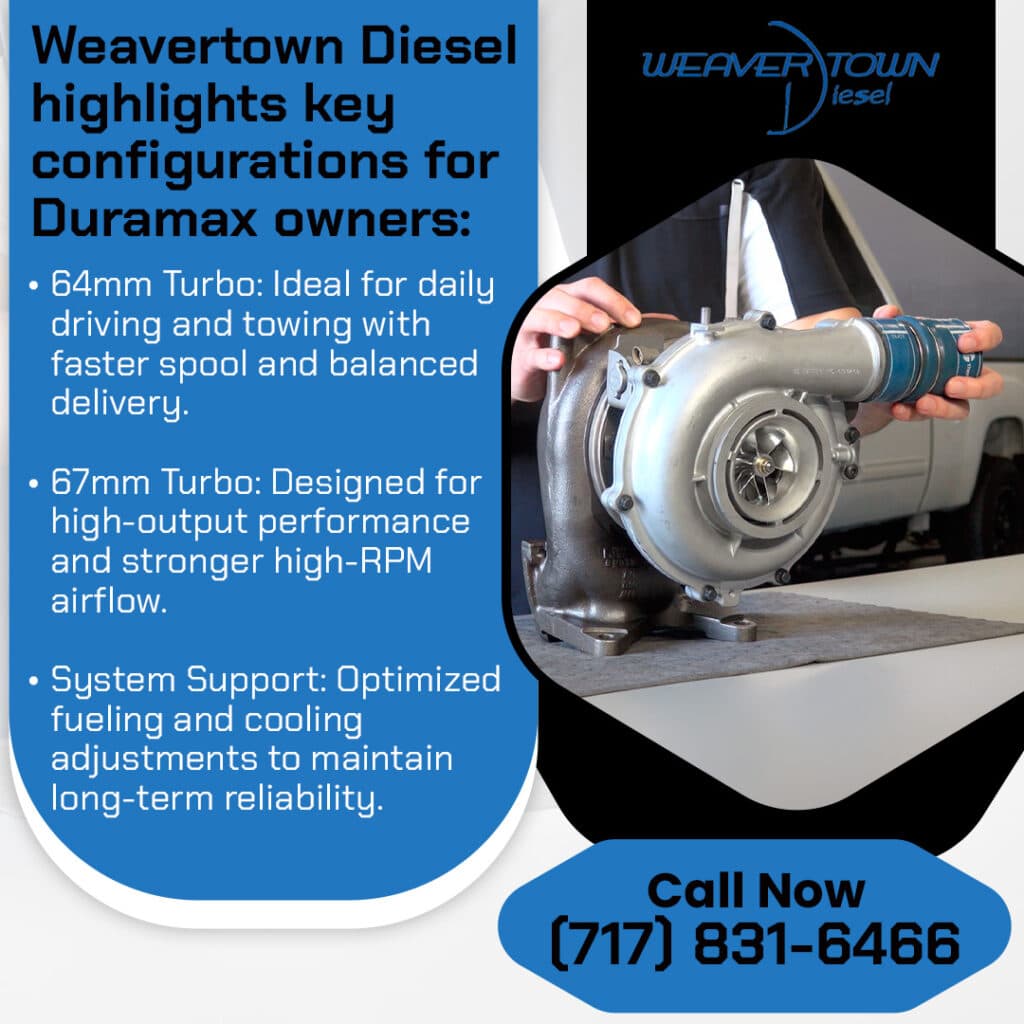
64mm vs 67mm LB7 Turbo Upgrade Comparison
| Category | 64mm Turbo | 67mm Turbo |
| Airflow & Power | Moderate airflow, up to ~600 HP. Balanced output for daily use and towing. | Higher airflow, 600–700+ HP with upgrades. Built for higher output. |
| Spool & Response | Faster spool, strong low-RPM response. | Slower spool, stronger high-RPM pull. |
| Best Application | Daily driving, towing, balanced setups. | Performance builds with fuel and tuning upgrades. |
Supporting Modifications Required for Duramax Turbos
Upgrading Duramax turbos changes how air moves through the engine, which also affects fuel delivery, temperature control, and engine calibration. Supporting modifications help the system operate in balance so the added airflow can be used effectively under load and during extended driving conditions.
Fuel System Adjustments
A Duramax turbo upgrade increases the amount of air entering the engine, which requires a matching increase in fuel delivery. When airflow rises without additional fuel support, combustion becomes inconsistent, and performance gains are limited. Fuel system adjustments help maintain a proper air-to-fuel ratio so combustion stays stable across different driving conditions.
In many LB7 setups, upgraded injectors or improved fuel delivery components are used to support higher airflow demand. This allows the engine to burn fuel more completely, which helps maintain steady power output during towing, acceleration, and continuous load situations. A balanced fuel system also reduces strain on the engine by preventing lean conditions during higher boost operation.
Intake and Cooling Systems
As Duramax turbos move more air, intake temperatures naturally increase. Higher temperatures reduce air density, which can affect combustion quality and overall performance. Intake and cooling upgrades help control these temperature changes and maintain consistent airflow into the engine.
Improved intercoolers and intake systems allow cooler, denser air to reach the combustion chamber. This supports smoother engine operation during sustained driving and heavy load conditions. Efficient cooling also helps reduce heat buildup in the system, which contributes to more stable performance over longer periods of use.
Engine Tuning
Engine tuning aligns fuel delivery, boost levels, and timing adjustments with the upgraded turbo system. Without proper calibration, the engine may not respond consistently to changes in airflow and boost pressure.
A Duramax LB7 turbo upgrade benefits from tuning that matches the increased airflow capacity. Adjustments to fuel mapping and boost control help maintain balanced engine behavior across different RPM ranges. This coordination allows the turbo, fuel system, and engine components to work together under varying load conditions, supporting smoother and more predictable performance overall.
How LB7 Turbo Upgrades Compare to LBZ and LML Platforms
Duramax turbo systems differ across LB7, LBZ, and LML platforms due to changes in emissions equipment, airflow design, and engine calibration. Each platform responds differently to turbo upgrades, which affects performance behavior and supporting modification needs.
Turbo for LBZ Duramax
The LBZ platform uses a more refined factory turbo setup compared to the LB7. A turbo for LBZ Duramax typically benefits from improved airflow control and stronger factory fueling support, which allows it to handle higher power levels with fewer restrictions.
Compared to the LB7, LBZ turbo systems respond more smoothly under load and maintain better efficiency across a wider RPM range. Turbo upgrades on this platform focus on increasing airflow capacity while preserving drivability. The result is a more controlled power curve, especially during towing and mid-range acceleration.
LML Duramax Turbo Upgrade
The LML platform introduces additional emissions components that affect airflow and exhaust flow. A LML Duramax turbo upgrade is often designed to work around these restrictions while improving boost response and reducing airflow limitations.
Compared to LB7 and LBZ setups, LML turbo systems face more backpressure from factory equipment. Upgraded turbos help improve exhaust flow efficiency and restore lost performance caused by these restrictions. This results in better throttle response and stronger performance under load, especially in tuned or modified configurations.
Each platform requires a different approach to turbo selection due to differences in airflow design, emissions systems, and engine calibration, making the LB7, LBZ, and LML upgrades distinct in how they deliver performance gains.
Why Choose Weavertown Diesel for Duramax Turbo Upgrades
Duramax turbo upgrades require precise engineering, consistent testing, and a clear understanding of how each engine platform responds under load. Weavertown Diesel, based in Myerstown, PA, focuses on building and validating turbo systems specifically for Duramax applications, with attention to real-world driving conditions such as towing, hauling, and performance use. Every product we develop is shaped by hands-on testing and feedback from actual truck operations.
In-House Engineering and Testing
We design and assemble all Duramax turbo products in-house, which allows us to maintain full control over every stage of development. From initial design to final assembly, each step is handled internally so that performance standards remain consistent.
Before any turbo is released, our team tests it under different load conditions to evaluate airflow capacity, boost response, and durability. This includes observing how the turbo behaves under sustained pressure and varying RPM ranges. These tests help us identify how each unit performs in real applications rather than relying on theoretical output alone.
This process allows us to make adjustments where needed, ensuring the final product is better suited for everyday use, towing demands, and performance builds.
Focus on Duramax Performance
Our work centers entirely around Duramax platforms, which gives us a clear understanding of how LB7, LBZ, and LML engines respond to turbo changes. Each platform has its own airflow characteristics, fuel behavior, and boost requirements, so we design products that match those differences directly.
This includes solutions for Duramax turbos, turbo for LBZ Duramax, and LML Duramax turbo upgrade applications. Instead of using a one-size-fits-all approach, we develop each turbo with a specific engine behavior in mind. That allows the product to deliver more consistent results across different driving conditions and modifications.
Product Durability and Reliability
Weavertown Diesel prioritizes durability in every turbo we build. This includes reinforced components, balanced rotating assemblies, and materials selected for extended use under heat and load. The goal is not short-term power gains, but stable performance over time in demanding conditions.
Our testing process includes real-world scenarios such as towing heavy loads, highway driving, and tuned performance setups. We evaluate how each turbo performs across different stress levels to confirm long-term reliability.
This testing across the LB7 and LML platforms helps us refine our designs and maintain consistent performance standards. It also allows us to ensure that each turbo can handle extended use without compromising stability or drivability.
Upgrade Your Duramax Performance with Weavertown Diesel
Stronger airflow, better throttle response, and dependable towing performance start with the right turbo setup. Whether it’s a Duramax LB7 turbo upgrade or solutions for LBZ and LML platforms, Weavertown Diesel builds and tests components designed for real-world diesel demands. Connect with our team at (717) 831-6466 or email [email protected] to discuss the right Duramax turbo solution for your setup.