The LBZ Duramax is known for its short 2006–2007 production period, revised engine design, updated turbocharger system, and position between earlier and later diesel generations. Weavertown Diesel works with Duramax products and recognizes these generation-specific differences when serving diesel applications.
What Made the LBZ Generation Different?
The LBZ represented a distinct stage in Duramax development during the mid-2000s. It came after the LLY and before the LMM, but its importance goes beyond its place in the production timeline.
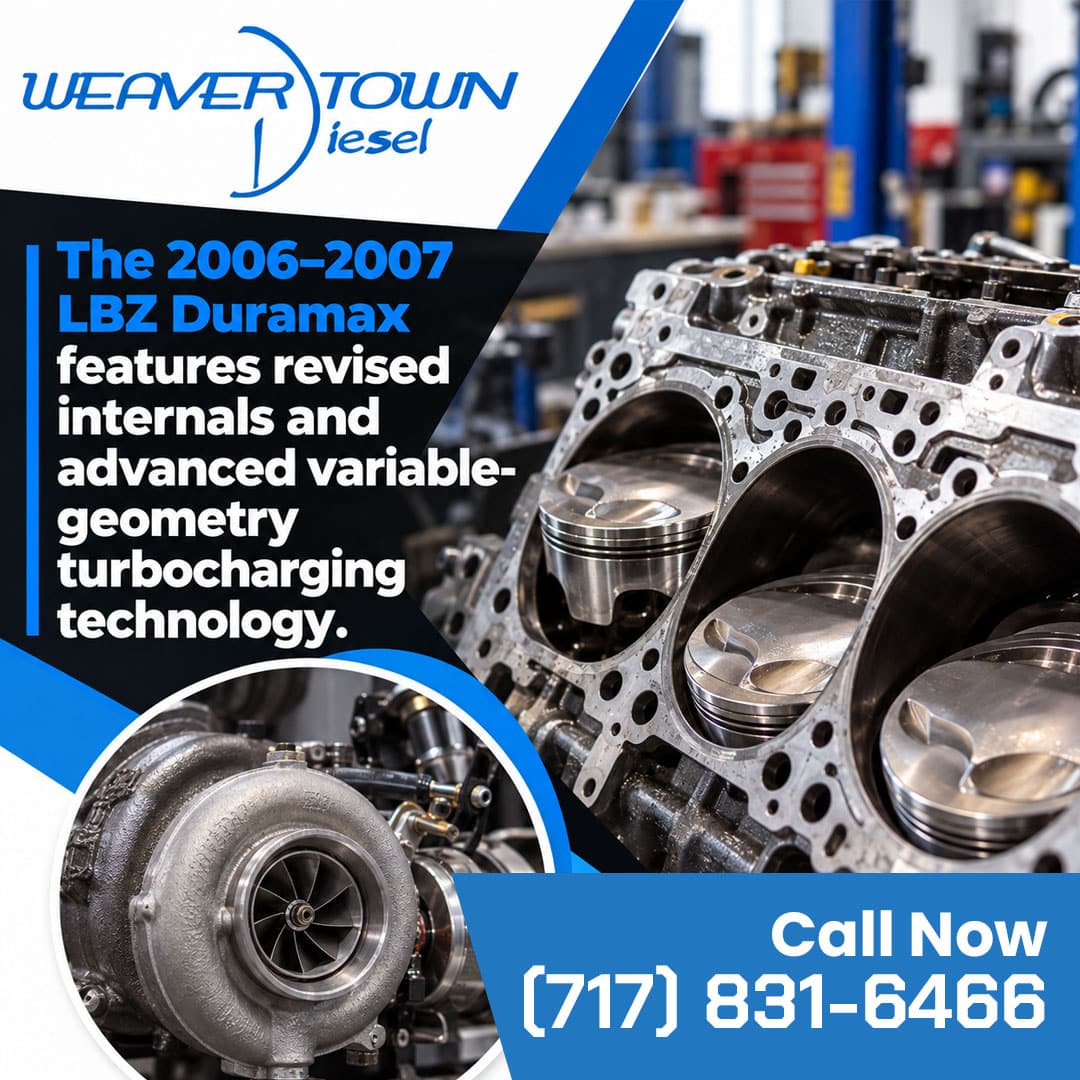
The generation received changes to its internal engine components and turbocharger system. These revisions were part of a broader effort to support the demands placed on newer diesel powertrains.
The LBZ also had a relatively short production window. Because of that, it became a clearly defined engine generation rather than a long-running platform that gradually changed over many years.
What Changed in the LBZ Engine Design?
The LBZ brought several internal changes compared with earlier Duramax designs. These included revisions to engine components intended to support the updated platform.
The changes are relevant when comparing a built LBZ Duramax engine with engines from other generations. A build based on the LBZ has to account for the design of that particular engine rather than treating all Duramax generations as identical.
Why Were Internal Changes Important?
Engine development involves more than increasing output. Changes to internal components can affect how an engine is assembled, serviced, and matched with other parts. For LBZ applications, the engine’s specific design is therefore an important distinction from earlier Duramax generations.
How Did the LBZ Turbo System Differ?
Turbocharging was another area of development during the LBZ period. The generation used a variable-geometry turbocharger system, allowing the turbocharger to adjust its operation across different engine conditions.
This approach gave the LBZ a different turbocharging setup from some earlier applications. It also created a platform with its own turbo-related parts and upgrade options. For a built Duramax long block, the turbo system remains a separate consideration because engine and turbo components serve different roles within the complete powertrain.
How Does the LBZ Compare With Other Duramax Generations?
The LBZ becomes easier to distinguish when viewed alongside the generations surrounding it.
| Generation | Approx. period | General development stage |
| LB7 | 2001–2004 | Early Duramax generation |
| LLY | 2004–2006 | Updated design before LBZ |
| LBZ | 2006–2007 | Revised internal and turbo design |
| LMM | 2007–2010 | Later emissions-focused generation |
| LML | 2011–2016 | Further fuel and emissions development |
| L5P | 2017 onward | Newer engine architecture |
The LBZ occupies a relatively short period in this timeline. Its combination of internal revisions and turbocharger development makes it distinct from both the LLY before it and the LMM that followed.
Why Did Emissions Technology Change After the LBZ?
The diesel industry faced tighter emissions requirements during the same period. The U.S. Environmental Protection Agency explains that heavy-duty diesel particulate-matter standards became much more stringent beginning with the 2007 model year. Meeting these standards led to greater use of diesel particulate filters and other emissions-control technologies.
This change marked an important difference between the LBZ era and later diesel generations. Later engines were developed around increasingly complex emissions requirements, creating additional differences in engine and exhaust-system design.
That history is useful when looking at a remanufactured Duramax engine application because the engine generation and its emissions configuration can affect the parts and systems involved.
Frequently Asked Questions
Was the LBZ produced for many model years?
No. The LBZ is generally associated with the 2006–2007 period, giving it a much shorter production span than several other Duramax generations.
Did the LBZ use a variable-geometry turbocharger?
Yes. The LBZ used a variable-geometry turbocharger system as part of its factory turbocharging design.
Why is the LBZ considered a separate Duramax generation?
The LBZ had its own combination of internal engine revisions, turbocharger design, and production period. These characteristics distinguish it from the generations immediately before and after it.

Find LBZ Products for Your Application
Need an LBZ engine or turbo for a specific project? Weavertown Diesel offers Duramax products for different applications, including dedicated options for the 06–07 LBZ platform. Contact our team at (717) 831-6466 or email [email protected] to discuss the available products.