
Duramax turbos hurt fuel economy when they lose boost pressure, forcing the engine to burn more fuel for the same power. At Weavertown Diesel, we typically see this show up as black smoke, sluggish acceleration, or a rising whine on LB7, LBZ, and LML trucks running worn turbo hardware.
What Are the First Signs?
A turbo that can’t hold proper boost forces the engine to work harder, and a harder-working engine burns more fuel for the same output. The earliest signs are usually subtle:
- Slightly reduced mileage
- A flatter feel off the line
- The engine revving higher than normal to hold speed
What Does Black Smoke Tell You About Your Turbo?
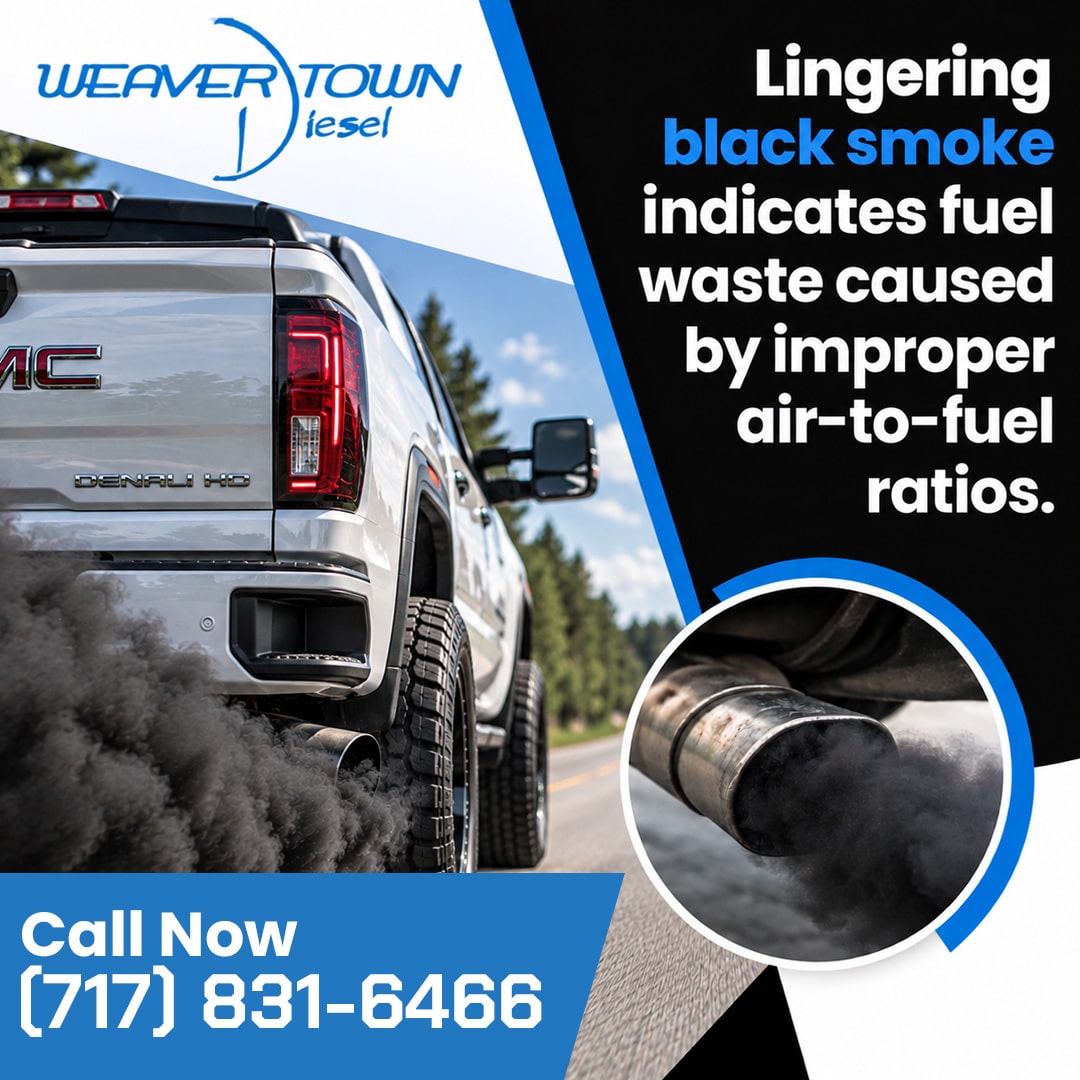
Thick black smoke usually means the engine is burning more fuel than the available air can support. This happens when Duramax turbos lose boost pressure and the engine overfuels to compensate, wasting diesel with every mile. A little haze under hard acceleration is normal, but smoke that lingers at steady speed is worth checking.
What Symptoms Point to an LB7 Turbo Problem?
LB7 trucks often show turbo wear through slow spool and a noticeable delay before boost builds. Owners weighing a Duramax LB7 turbo upgrade should also watch for a whistling or whining sound that climbs with RPM, since that usually points to a boost leak rather than full turbo failure. If the noise and the mileage drop persist together, a Duramax LB7 turbo upgrade typically addresses both the lag and the fuel penalty at once.
How Do LBZ and LML Turbo Symptoms Differ?
LBZ and LML platforms wear differently than the LB7, so their fuel-economy warning signs show up on a different timeline. A turbo for LBZ Duramax trucks tends to reveal itself first under towing load, while an LML Duramax turbo upgrade is usually something owners notice only after months of slowly creeping fuel bills.
| Generation | What You’ll Notice First |
| LB7 | Engine revs higher than usual just to hold a steady speed |
| LBZ | Mileage drops noticeably as soon as you hook up a trailer |
| LML | Mileage fades gradually over months instead of all at once |
What Should You Check Before Assuming the Turbo Is Bad?
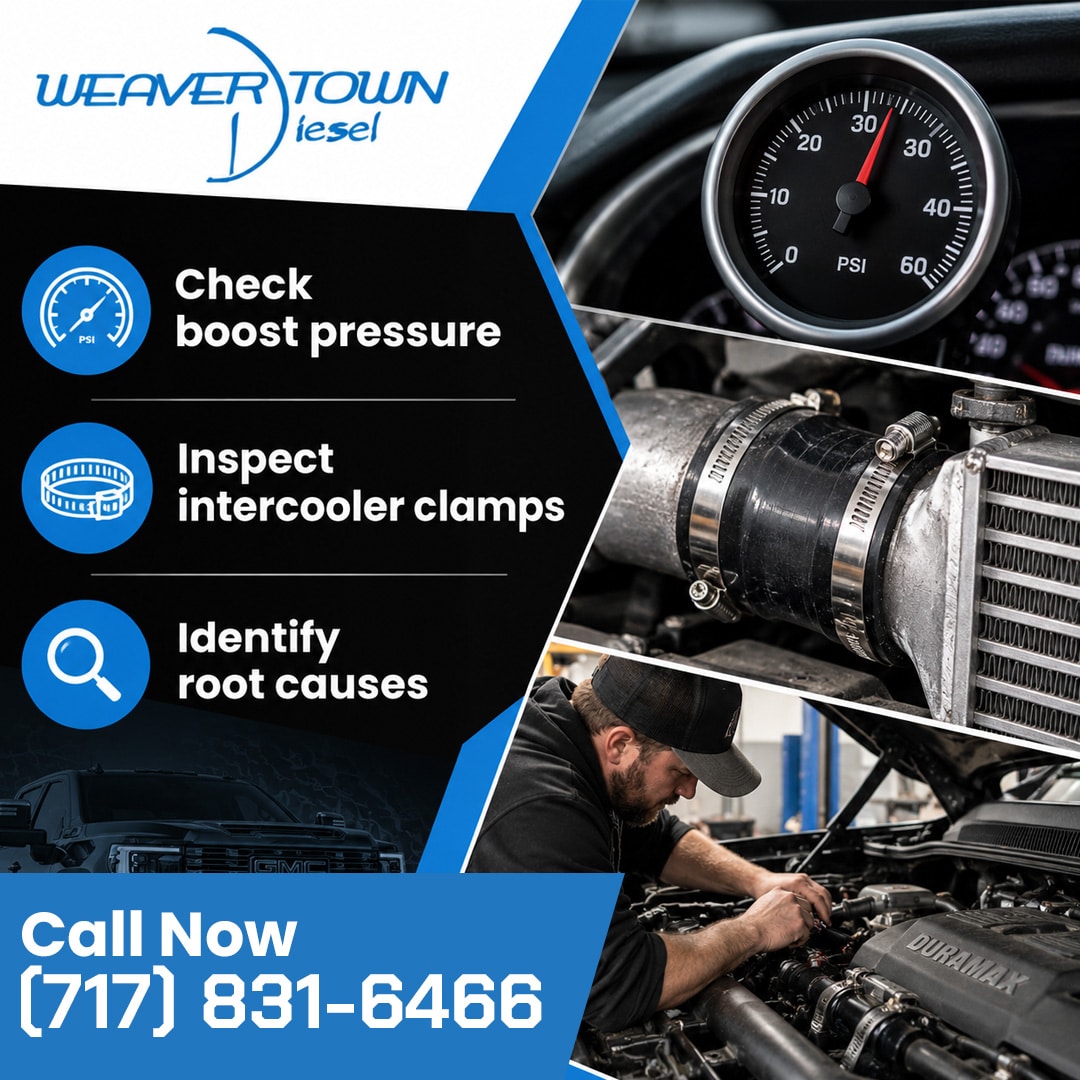
Not every fuel-economy drop means the turbo has failed. Before ruling on a repair or upgrade, check:
- Intercooler boots and clamps for boost leaks
- Air filter and intake for restrictions
- Stored boost-related trouble codes
- Current mileage against a baseline from before symptoms started
Vehicle Service Pros, a trade publication for repair technicians, reports that poor engine performance is too often blamed on the turbocharger when it is actually at fault only about 20 percent of the time. A malfunctioning wastegate, a faulty boost sensor, or a dirty air filter is behind most of the rest; the same items are worth ruling out here before assuming the turbo has failed.
Frequently Asked Questions
Can a failing turbo damage other parts of my engine if I ignore it?
Yes. Ignoring a boost leak or worn turbo can lead to overfueling and higher exhaust temperatures, which strain other engine components over time.
How much can a failing turbo actually lower my fuel economy?
It varies by severity, but drivers often notice several miles per gallon lost once boost loss becomes consistent rather than occasional.
Is it normal for a Duramax turbo to make any noise at all?
A faint whistle under hard acceleration can be normal. A whine that grows steadily louder or appears at idle usually signals a developing problem.
Should I try to diagnose this myself or take it to a shop?
Basic checks like inspecting hoses and clamps are fine for most owners, but boost and smoke testing are best left to a shop that works on Duramax engines regularly.
Not Sure If Your Turbo Is the Problem?
Weavertown Diesel can help you figure out whether your Duramax is dealing with a simple boost leak or a turbo that’s due for an upgrade. Contact us at (717) 831-6466 or email [email protected] to get a straight answer before you spend money on the wrong fix.